
New book · 2026
The money class
you were never given.
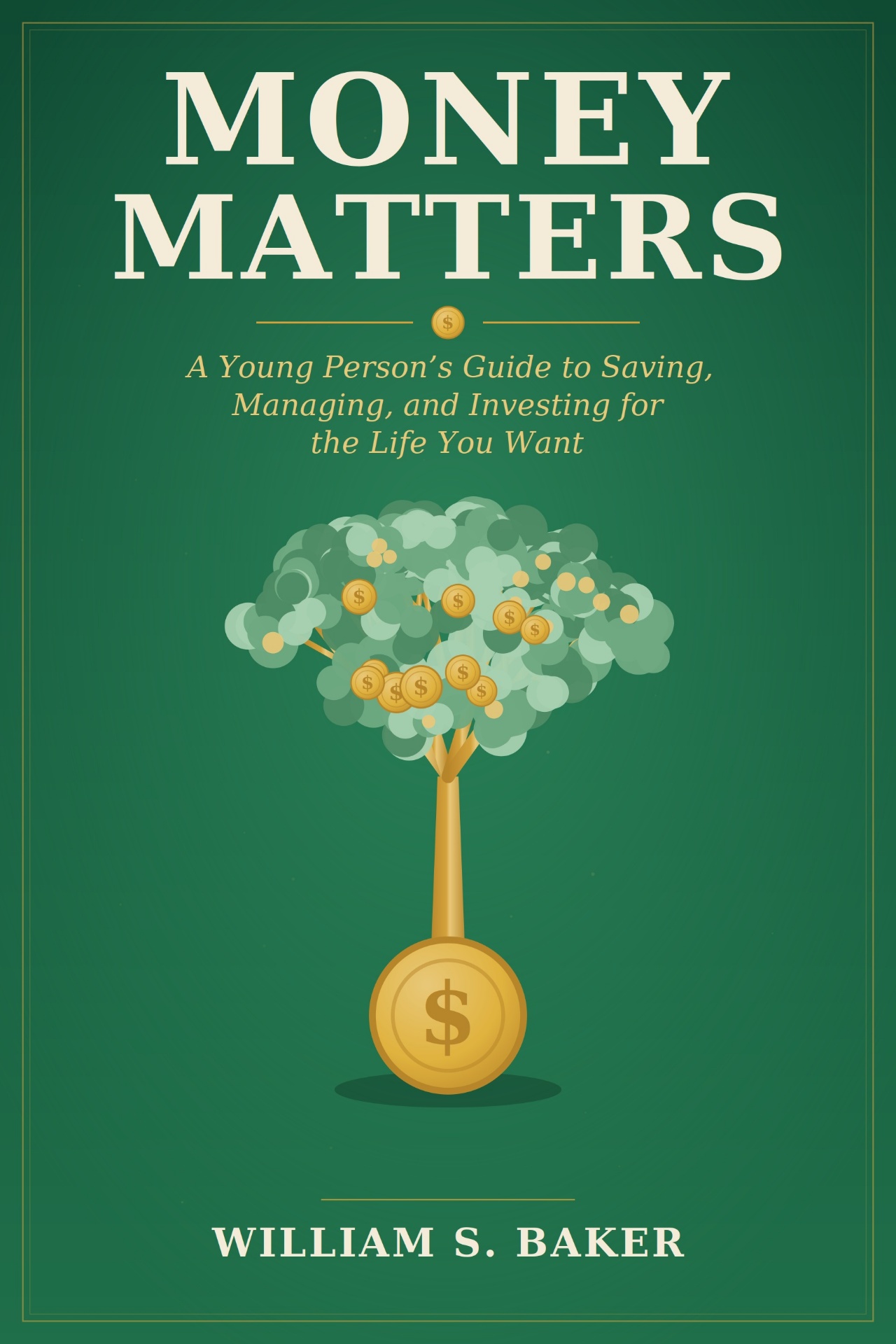
Most schools won't teach you this. Money Matters is the best personal finance book for young adults — a beginner's roadmap from your first paycheck to a future you actually control. Written for teenagers and people in their 20s in friendly, plain English.
ISBN 979-8-19-739877-2 · Available in paperback and Kindle.
Inside the book
What you'll actually learn
Pay yourself first
Build a budget and emergency fund that actually last. Learn the 50-30-20 budgeting rule and money management for beginners — no spreadsheets required.
Compounding wins
The math behind real wealth and compound interest for young adults. Why starting at 21 changes everything and how to start investing as a beginner.
Invest without fear
Stocks, index funds for beginners, Roth IRAs, 401k plans, and the free money your job will hand you. Understand retirement accounts young.
Twelve short chapters. Twelve practical worksheets.
One simple promise: start now.
"Time on your side is the most valuable money tool you'll ever have. This book hands you the map." — William S. Baker
Questions
Common questions about money
What is the best personal finance book for young adults?
Money Matters: A Young Person's Guide to Money by William S. Baker is a clear, friendly personal finance book written specifically for young adults and beginners. It covers budgeting, saving, investing, retirement accounts, and avoiding debt — with practical worksheets and no confusing jargon. It's an ideal graduation gift for high school and college graduates.
How can teenagers learn about money?
Teenagers can learn about money by reading beginner-friendly financial literacy books like Money Matters, which teaches personal finance basics for beginners including the 50-30-20 budgeting rule, compound interest, emergency funds, and how to avoid credit card debt — all in plain English with practical worksheets.
What should I know about money in my 20s?
In your 20s, the most important money habits to build are: creating a budget, paying yourself first by automating savings, building an emergency fund, understanding your 401k and starting a Roth IRA, and learning the difference between saving and investing. Starting in your 20s gives compound interest decades to work in your favor.
How do I teach my teenager about money?
The best way to teach a teenager about money is to give them a beginner personal finance book they can actually read and use. Money Matters by William S. Baker was written for exactly this purpose — it covers what to do with a first paycheck, how to budget after graduation, and how to start saving money in your 20s without being boring or condescending.
What is the difference between saving and investing?
Saving is putting money somewhere safe and accessible for short-term needs and emergencies — like a savings account. Investing is putting money into assets like index funds or retirement accounts so it can grow over time through compound interest. Young adults should do both: build an emergency fund through saving, then start investing early so time works in their favor.
Fresh thinking
From the blog
A monthly note on personal finance for young people — practical, short, and worth your coffee break.