
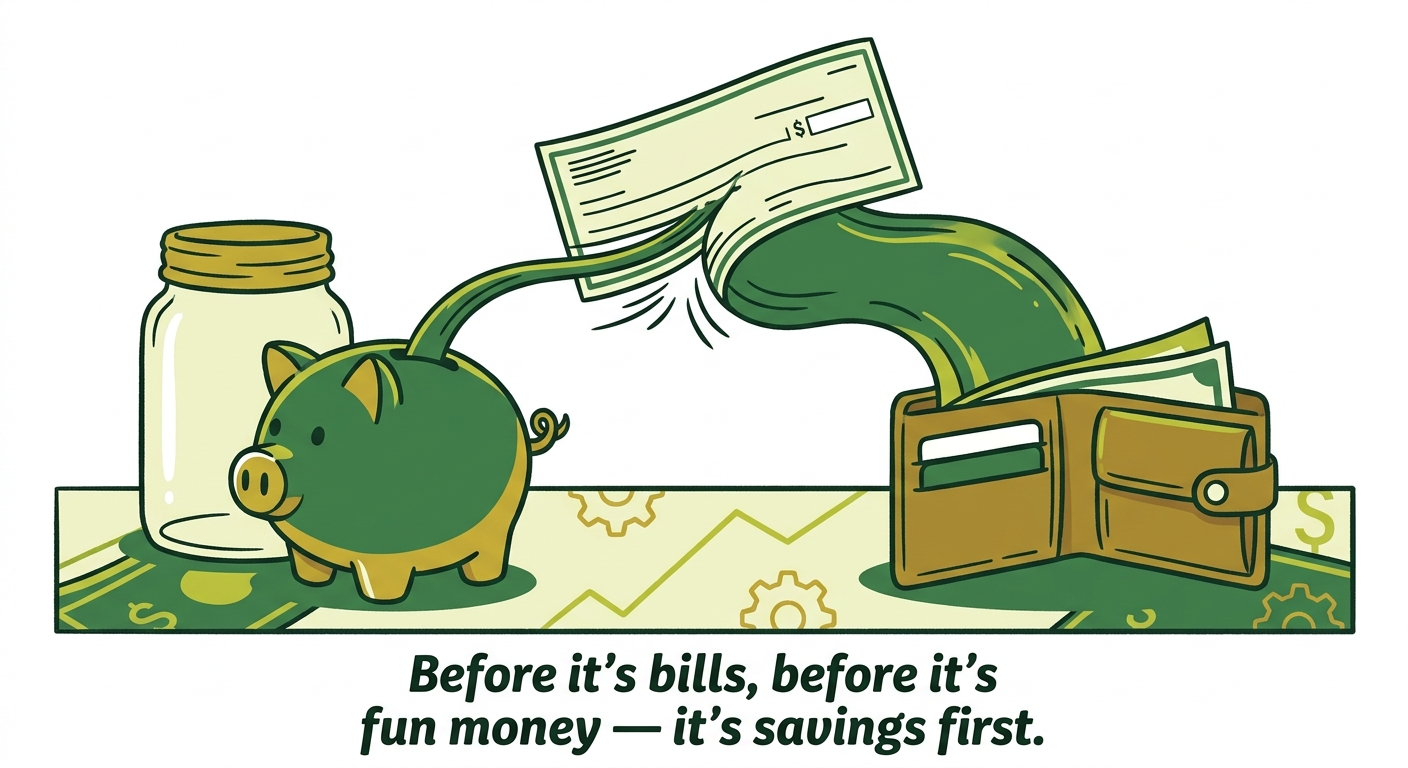
Last month we broke down the gap between gross pay and net pay — the real number your paycheck actually delivers. So now you know the number. The question is what to do with it.
Most people do the same thing with every paycheck: pay the bills, spend on the stuff they want or need, and whatever happens to be left over at the end of the month gets "saved." Except there's rarely anything left over. Not because they're bad with money — because saving what's left is saving nothing. Life expands to fill the space it's given.
There's a better order to do this in. It's called paying yourself first, and it's one small change in sequence that changes almost everything downstream.
The Old Order vs. The New Order
The way most people budget looks like this: income comes in, bills get paid, spending happens, and savings gets whatever scraps survive to the end of the month. Savings is last in line — which means savings is optional, every single month, by design.
Paying yourself first flips that order. The moment your paycheck lands, a set amount moves to savings or investing before anything else touches it. Bills and spending happen with what's left, not the other way around.
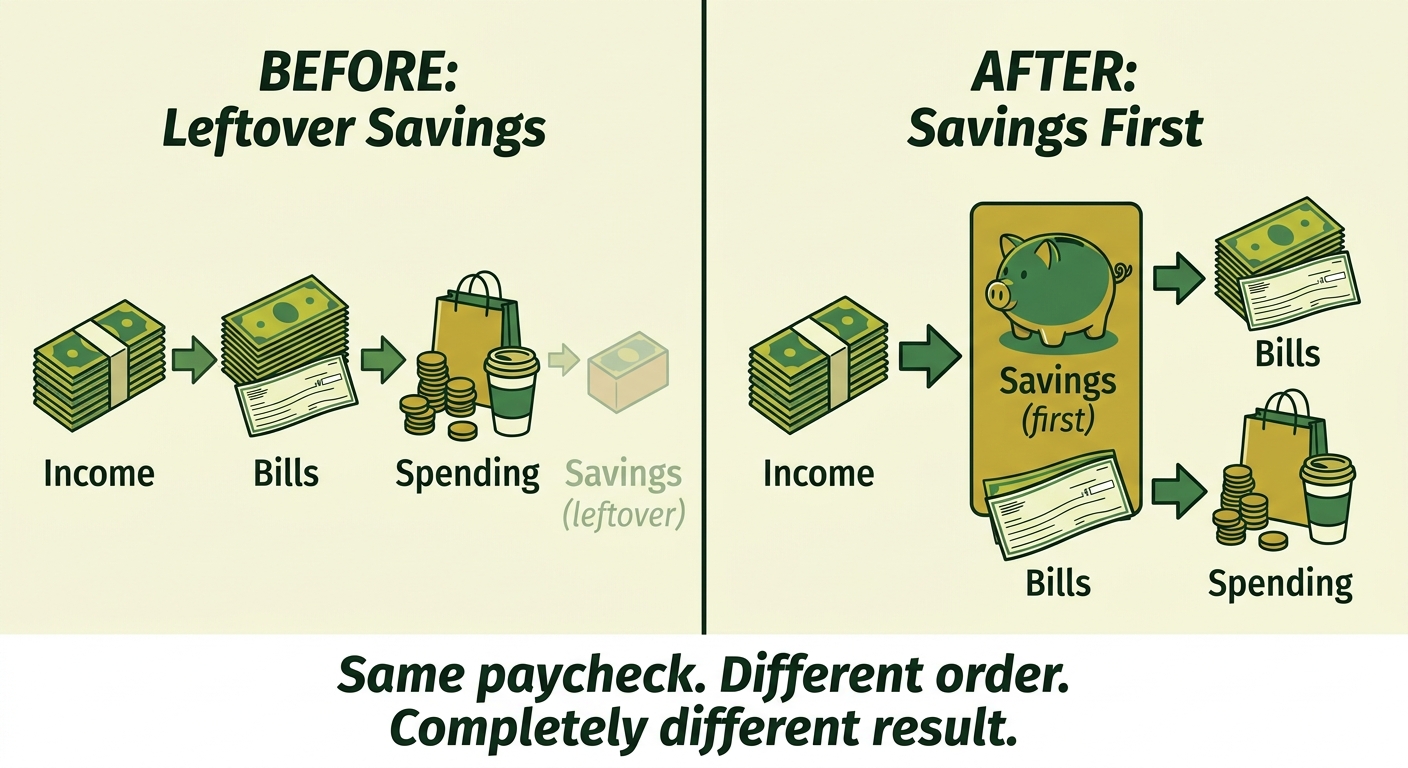
Nothing about your income changed. Nothing about your bills changed. The only thing that moved is where savings sits in line — and that one shift is the difference between saving by accident and saving on purpose.
Why This Works When Willpower Doesn't
Willpower is unreliable. It's strong on a good day and nonexistent after a rough one, and money decisions get made on both kinds of days. Paying yourself first doesn't ask you to be disciplined every single day. It asks you to be disciplined once — when you set it up — and then the system carries the discipline for you.
This is the same principle behind why 401(k) contributions work so well: the money moves before you ever see it, so you never have the chance to talk yourself out of it. You can't spend what you never touched.
How to Actually Set It Up
1. Pick a number, not a leftover.
Start with something real but painless — even 5% or 10% of each paycheck. The exact number matters less than the habit of it moving automatically, every time.
2. Automate the transfer.
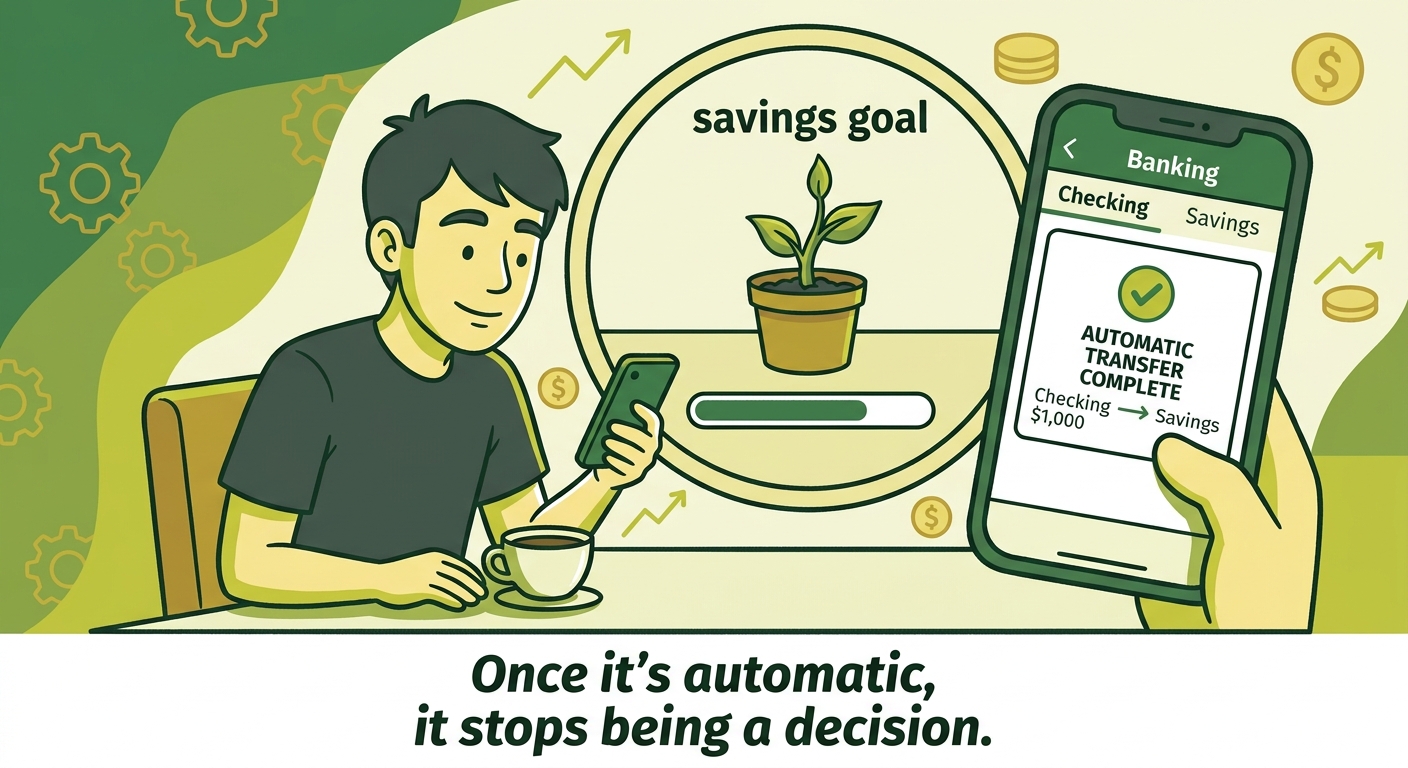
Set up an automatic transfer from checking to savings (or investing) for the same day your paycheck lands. Most banks and payroll systems let you split a direct deposit two ways — use that if it's available. If not, an automatic transfer scheduled for payday works just as well.
3. Treat it like a bill you can't skip.
Name the transfer something like "Future Me" if your bank allows it. The goal is to think of it exactly the way you think of rent — non-negotiable, already accounted for, not up for debate on a tight week.
Start Small, Increase Later
You don't need to get this perfect on the first paycheck. Start with an amount that won't strain you — even $20 or $25 a paycheck builds the habit. Every time you get a raise or your income goes up, increase the automatic transfer before your spending has a chance to expand to fill it. That's how you avoid the lifestyle creep we've talked about before, and how a small habit at 17 or 22 turns into real financial footing by 30.
The goal isn't to deprive yourself. It's to make sure your future self always gets paid — automatically, quietly, every single time — before anyone else gets a say.
Next up: what to do with the money you're now saving — starting with the safety net every beginner needs, a starter emergency fund.
If this resonates with you, this is exactly the philosophy that Money Matters is built on — the practical system for treating your money well, in plain language, with worksheets to put each idea into practice.
Visit MoneyMatters.website to grab a copy of the book, download the free worksheets, and look around. The way you treat your money this year is the life you live ten years from now.
— William S. Baker