
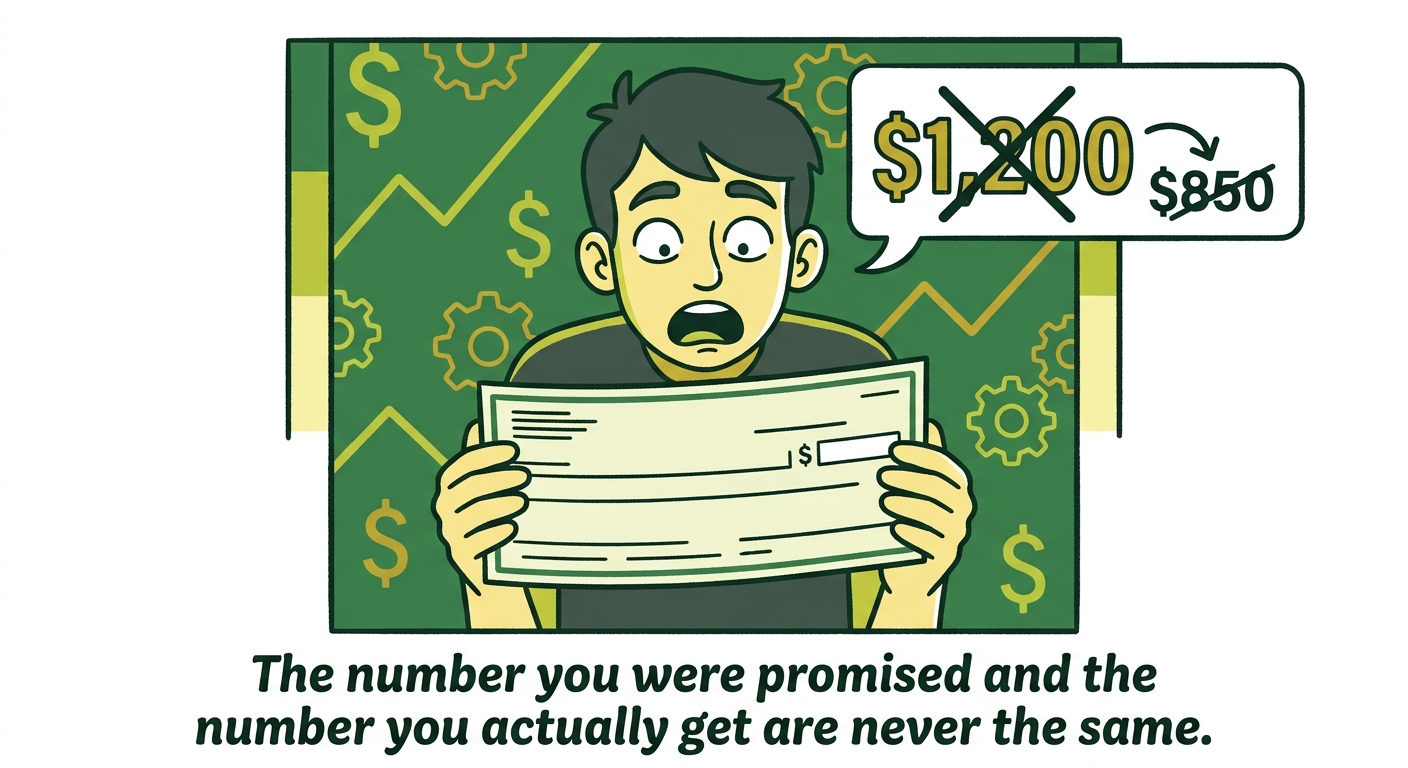
My stepdaughter just turned 17 and landed her first job — fast food, golden arches, the whole classic first-job experience. She's counting down the days until her first paycheck lands on Friday, and she's already done the math in her head: so many hours, times her hourly rate, equals a number she's excited about.
That number is wrong. Not because anyone lied to her on purpose — but because almost nobody explains the gap between what you earn and what actually shows up in your account. So let's fix that, for her and for anyone else who's ever opened a first paycheck and thought, "wait, where did the rest of it go?"
Gross Pay vs. Net Pay
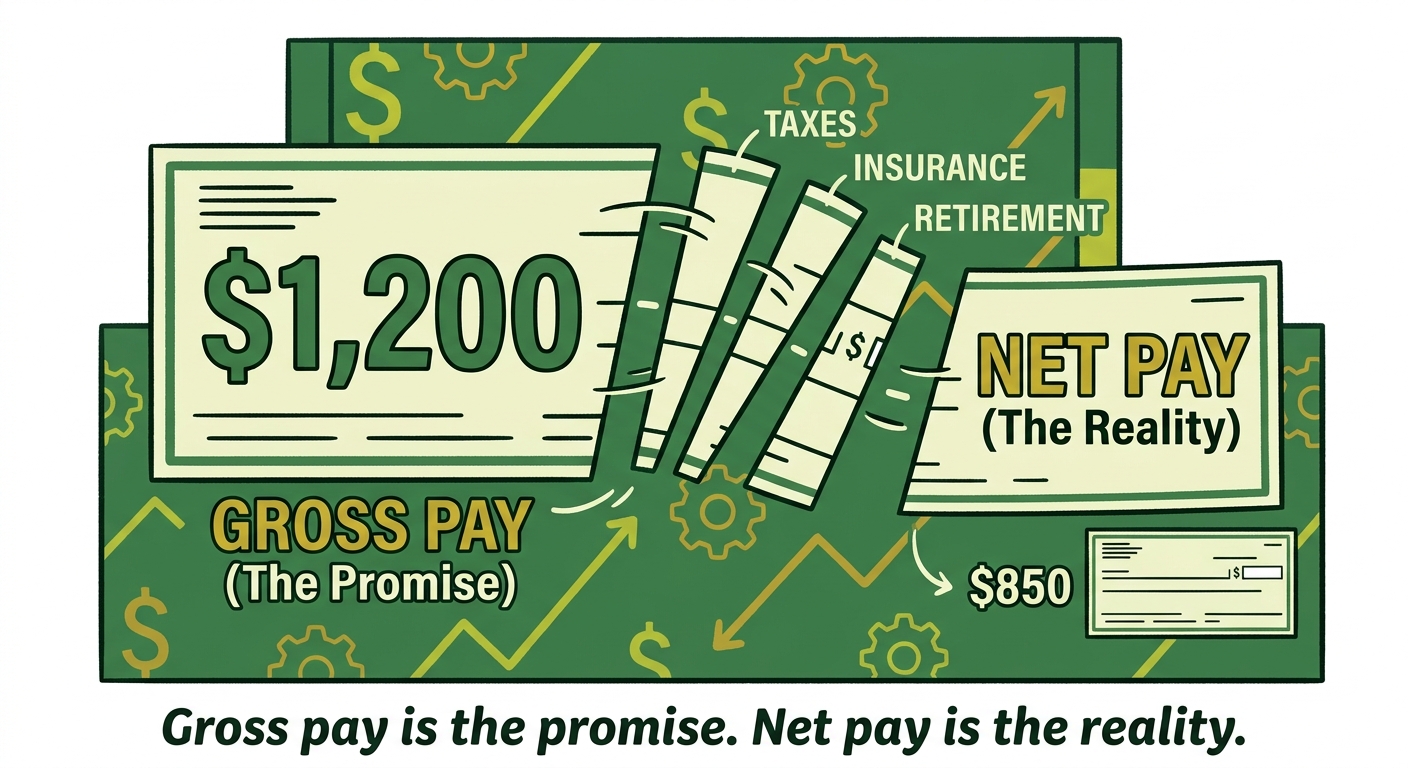
The number you agreed to when you got hired — your hourly rate times your hours, or your salary — is called gross pay. It's the headline number. It's also not the number you get to spend.
Net pay is what actually lands in your bank account after everything gets taken out. And "everything" is doing a lot of work in that sentence.
Where the Rest of It Actually Goes
For most first paychecks, the biggest bite comes from taxes — federal income tax, and depending on where you live, state income tax too. On top of that, everyone working in the U.S. pays FICA taxes: Social Security and Medicare, a flat percentage taken straight off the top no matter what.
If your employer offers benefits and you've opted into any of them, health insurance premiums or retirement contributions come out too, before you ever see the money. None of this is a scam. It's not your employer shortchanging you. It's the system working exactly as designed — you just were never handed the instruction manual.
The result: your first paycheck might show 8% to 20%+ missing from that number you did in your head, depending on where you live and what you've opted into. That's not a mistake. That's just what "net pay" means.
Why This Matters More at 17 Than It Will Later
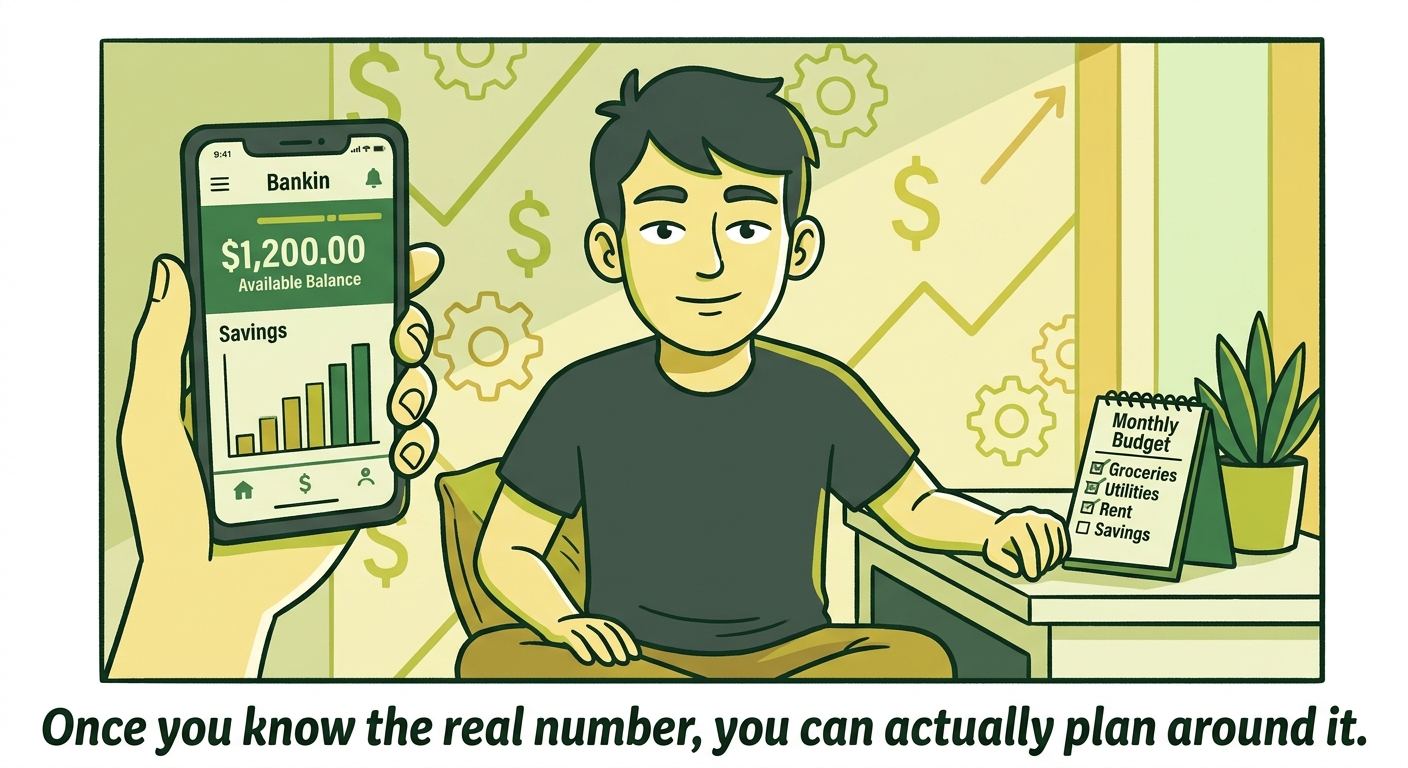
Here's the thing about learning this lesson now instead of at 25: it costs nothing to learn it early, and it costs real money to learn it late. People who don't understand the gap between gross and net pay tend to build spending plans around the wrong number — the big one, the one on the offer letter — and then wonder why their bank account never matches what they expected.
Learn to budget off your net pay, from your very first paycheck, and you'll never fall into that trap. It's a habit, not a talent, and habits are easiest to build before there's anything on the line.
The One Thing to Do With Your First Paycheck
Before you spend a dollar of it, look at the pay stub — not just the deposit amount, but the breakdown above it. Find your gross pay. Find your net pay. Look at what sits between them. That five minutes of curiosity is the entire lesson. You'll never be confused by a paycheck again.
My stepdaughter is going to get that pay stub Friday, and before she spends a cent of it, we're going to sit down and go through it line by line. Not to lecture her — just so the number she plans around is the real one, not the one she imagined.
That's the whole trick. Know the real number. Everything else follows from there.
Next up: what to actually do with that first paycheck once you know the real number — starting with the "pay yourself first" habit.
If this resonates with you, this is exactly the philosophy that Money Matters is built on — the practical system for treating your money well, in plain language, with worksheets to put each idea into practice.
Visit MoneyMatters.website to grab a copy of the book, download the free worksheets, and look around. The way you treat your money this year is the life you live ten years from now.
— William S. Baker