You've learned the real number on your paycheck. You've started paying yourself first. Now your money is landing somewhere on purpose, and the next question is a good one: what is it actually for?
Before investing, before big goals, before anything exciting, the answer is boring and powerful: a safety net. An emergency fund is the money that stands between you and a bad week turning into a bad year.
Why Emergencies Are Never Rare
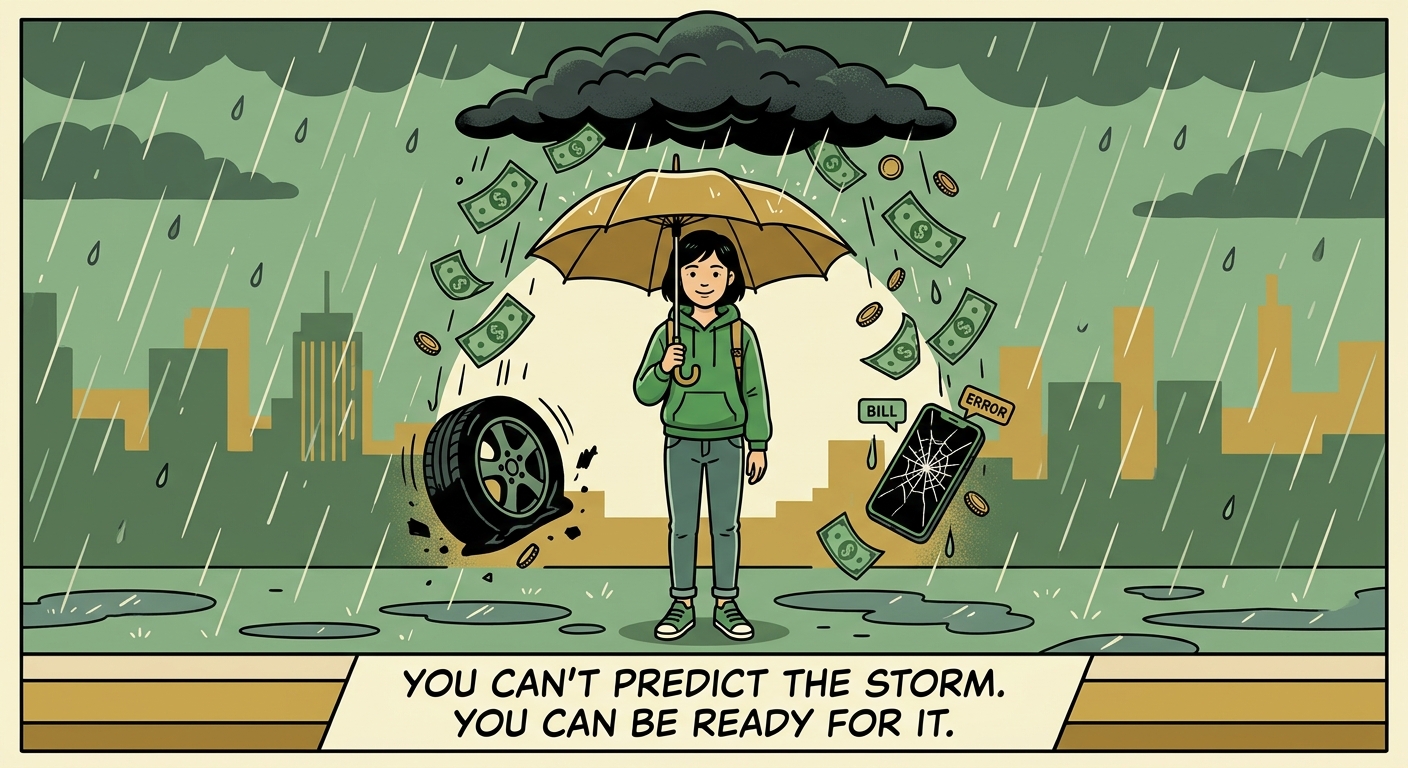
Here's the thing about emergencies: the word makes them sound unusual, and they're not. A flat tire. A phone that dies right when you need it. A dentist bill. A few weeks of reduced hours at work. Something unexpected will happen to everyone, and usually sooner than they think.
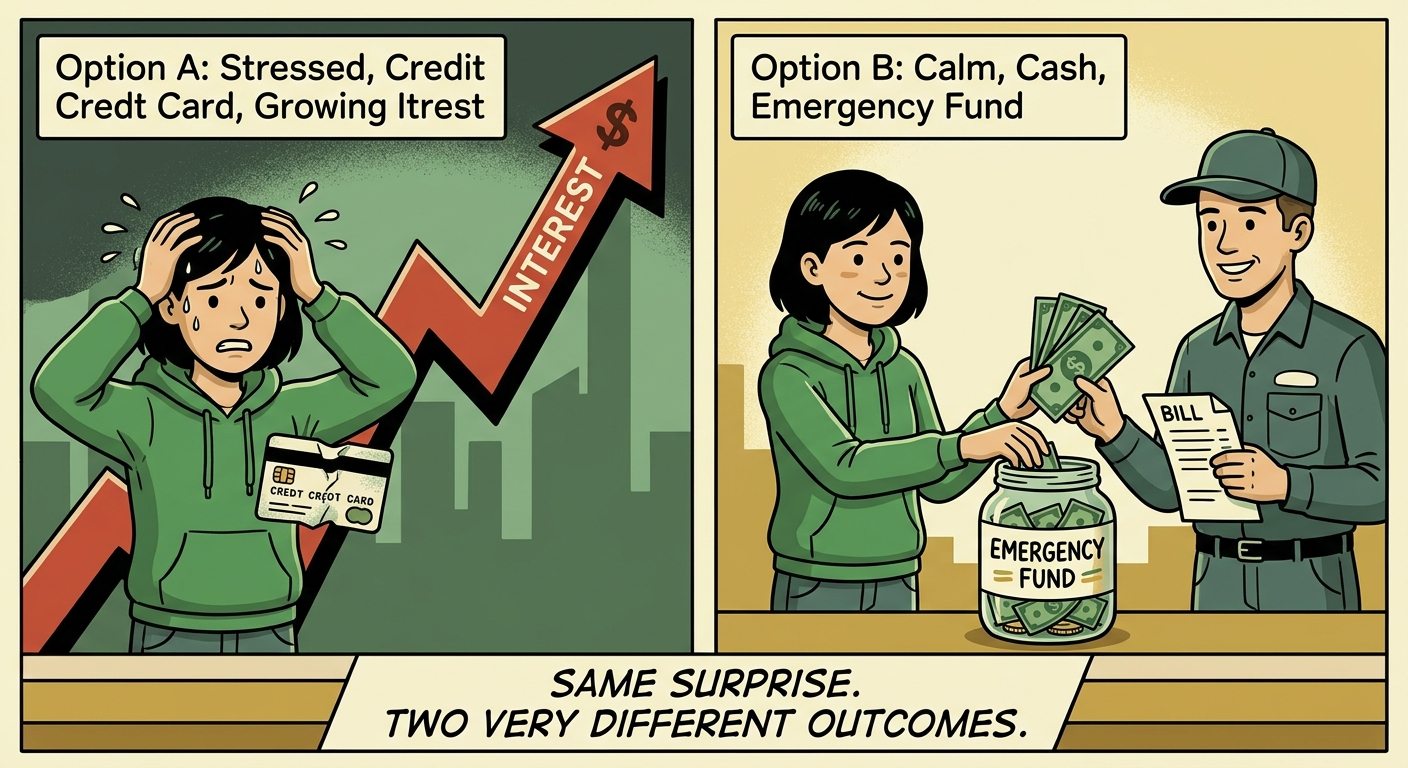
The only real question is what happens when it does. Without a cushion, the answer is almost always a credit card, and that's how a $400 surprise becomes a $600 problem that follows you for months. With a cushion, it's an inconvenience you handle and move on from.
Start With $1,000, Not With Perfect
You may have heard that you need three to six months of living expenses saved. That's a great long-term target, and we'll get there. But for a beginner, that number can feel so far away that it never gets started.
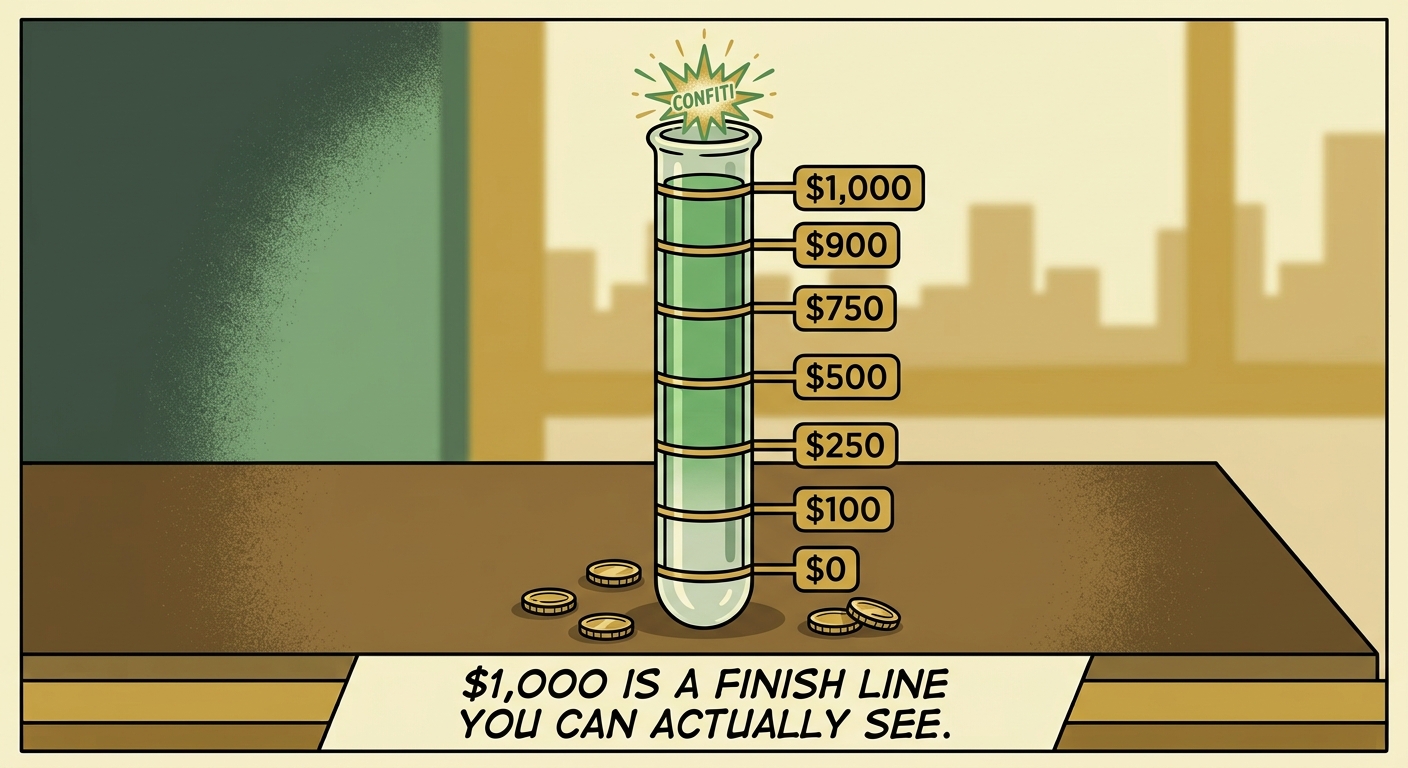
So don't start there. Start with a starter emergency fund of $1,000. It's small enough to reach in a reasonable time, and big enough to cover most of the common surprises that knock beginners off track. If $1,000 feels like too much right now, start with $250 and build from there. The first dollar matters more than the first thousand.
Once you hit your starter fund, you can keep growing it toward that bigger three-to-six-month goal at your own pace.
Where to Keep It
This part matters more than people expect. Your emergency fund should be:
1. Separate.
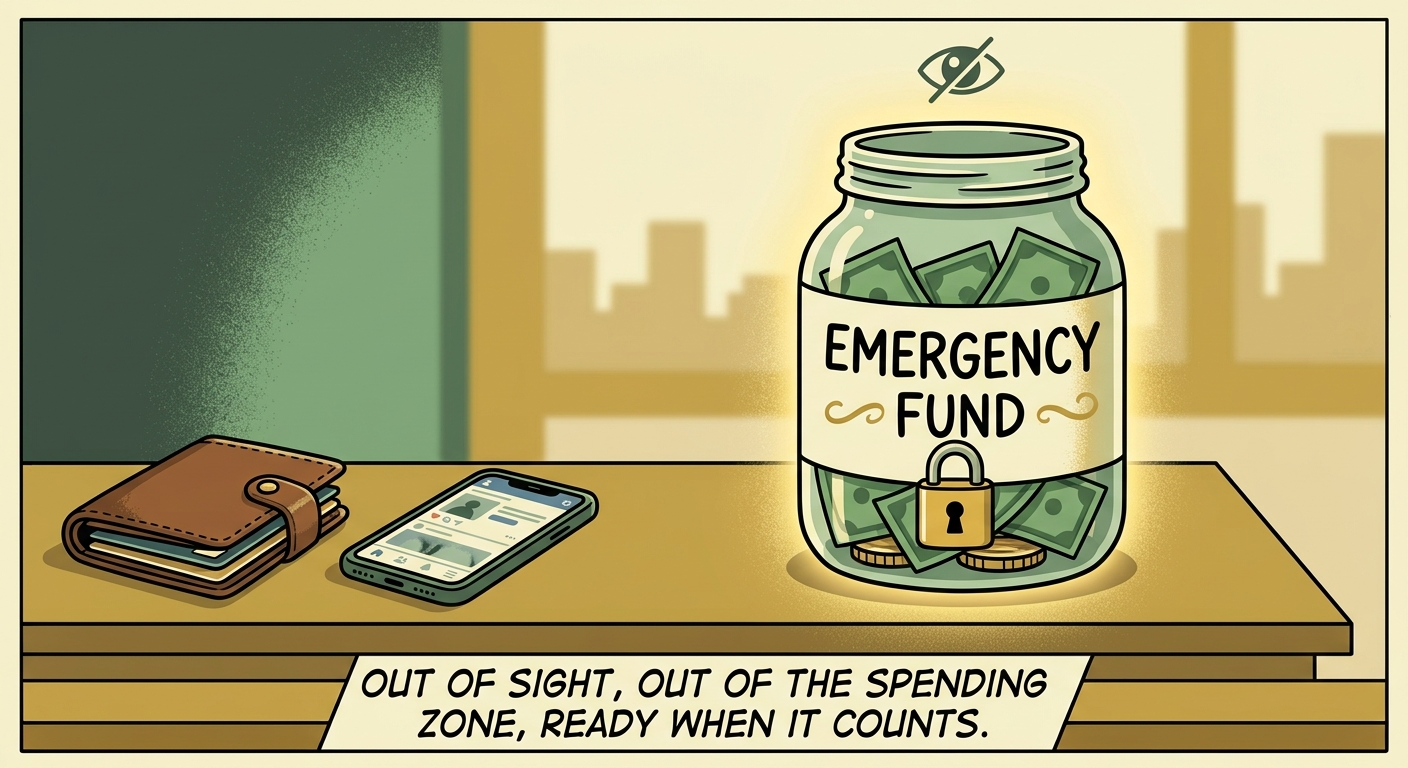
Keep it in its own account, not mixed into your everyday checking. Money you can see in your spending account gets spent.
2. Safe.
This isn't the place for investing or risk. The goal is that the money is there, in full, when you need it.
3. Easy to reach, but not too easy.
A high-yield savings account is a popular choice because it earns some interest while staying accessible. Just confirm the account is FDIC-insured, and check the current rate yourself, since rates change.
What Counts as an Emergency?
This is where a lot of good plans quietly fall apart. A sale on shoes is not an emergency. Neither is a concert, a weekend trip, or a great deal you'll regret missing.
An emergency is something unexpected, necessary, and urgent: a car repair you need to get to work, a medical bill, a gap in income. A simple test: if you can wait, plan for it, or live without it, it isn't an emergency. Protect the fund by keeping that definition strict.
If you do use it, the next job is simple. Refill it before anything else.
Build It Without Feeling It
You already know the trick from last time. Pay yourself first. Set up an automatic transfer on payday straight into your emergency fund account, even $20 or $25 at a time. Small and automatic beats big and occasional every time.
Your emergency fund won't impress anyone. Nobody posts a picture of it. But on the day something goes wrong, it's the quiet reason you stay calm, stay on track, and keep building the life you actually want.
If this resonates with you, this is exactly the philosophy that Money Matters is built on — the practical system for treating your money well, in plain language, with worksheets to put each idea into practice.
Visit MoneyMatters.website to grab a copy of the book, download the free worksheets, and look around. The way you treat your money this year is the life you live ten years from now.
— William S. Baker